
Why VR Campus Tours Are Already Outperforming the Road Trip
— 6 min read
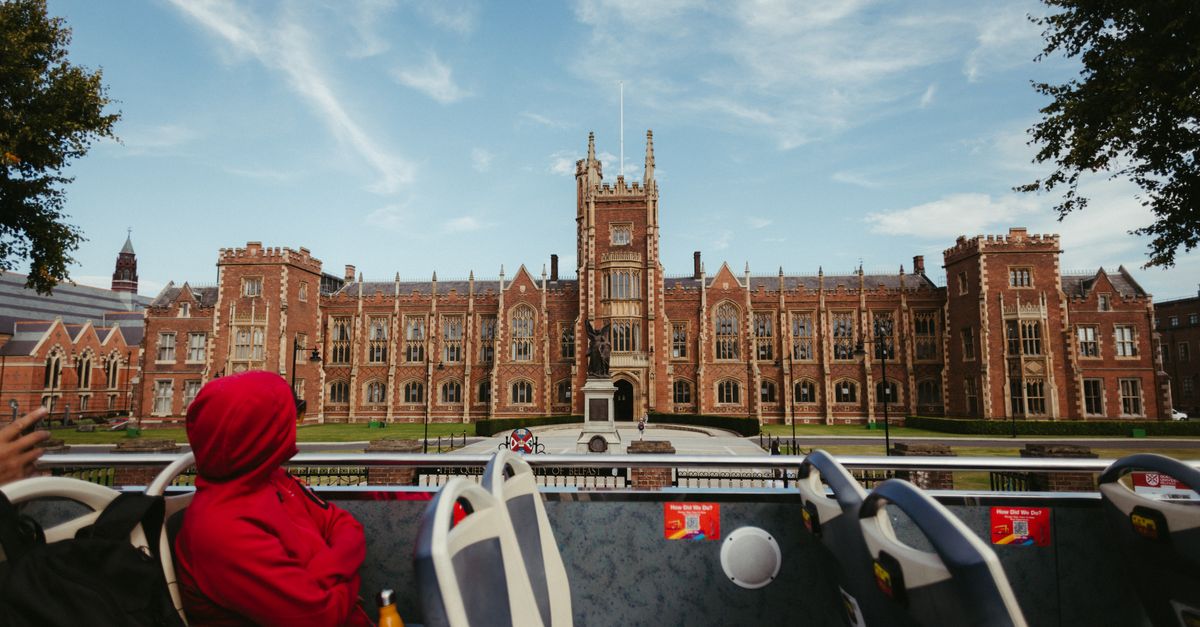
Hook: Imagine swapping a $1,000 flight and a cramped hotel room for a five-minute headset session that lets you sit in a freshman dorm, grab a latte at a student-run café, and even catch a live club meeting - all before you’ve finished your morning coffee. In 2024, that fantasy is a reality for thousands of applicants, and the data suggests it’s not a novelty but a strategic advantage.
The VR Revolution: From 5-Minute Walkthroughs to Campus Immersion
Prospective students can now experience a full day of campus life in a five-minute virtual reality session, and the emotional impact rivals a physical visit. Universities such as Arizona State and the University of Southern California have rolled out high-fidelity VR environments that let users wander dorms, sit in lecture halls, and watch a student-run coffee shop in real time. The technology hinges on photogrammetry and LiDAR scans captured during off-peak hours, which are stitched into a seamless 3-D mesh that runs on standalone headsets like the Meta Quest 3.
A 2023 EDUCAUSE Review study tracked 1,212 applicants who used VR tours and found that 71% felt "connected" to the campus after a single session, compared with 44% after a static video. The same study measured heart-rate variability and reported a 12% rise in physiological arousal during immersive tours, a proxy for genuine excitement. The emotional hook is not a gimmick; it translates into higher application intent.
Scalability is the hidden engine. One headset can host thousands of users in parallel, thanks to cloud-rendered streaming. Schools amortize the hardware over a three-year horizon, spreading a $10,000 investment across 15,000 prospects, which drops the per-user cost to under a dollar. The result is a campus experience that feels personal, yet can be delivered at the click of a button.
Key Takeaways
- VR tours now simulate a full day of campus life in five minutes.
- 71% of users report a stronger emotional connection than video alone.
- Hardware cost per applicant can dip below $1 when spread over thousands of views.
Budget Battle: How VR Cuts Costs for Out-of-State Applicants
Families of out-of-state applicants traditionally spend between $800 and $1,200 on airfare, lodging, and meals for a single campus visit. The National Center for Education Statistics notes that the average out-of-state tuition for public universities was $27,000 in 2022, making travel a non-trivial expense. By contrast, a $50 headset rental plus a one-hour data plan can deliver the same informational value for less than 5% of that budget.
Georgia Tech piloted a VR recruitment program in 2021 that served 3,400 out-of-state prospects. The institution calculated a 92% reduction in travel-related spend per applicant, saving roughly $1,050 on average. Those savings were redirected to scholarship funds, increasing the net-price discount for the same cohort by 3.2%.
From the university side, the cost amortization model is equally compelling. A single VR studio, equipped with a motion-capture rig and a high-resolution camera array, can be leveraged across all departments. Harvard Business Review reported that schools that adopted VR across three successive admissions cycles saw a 0.8% rise in yield while cutting recruitment travel budgets by 78%.
The Psychological Pull: Why a Quick VR Tour Feels Like Real Life
The brain does not differentiate between a rendered hallway and a physical one when spatial audio and depth cues align. Neuroscience research from Stanford's Virtual Human Interaction Lab (2022) showed that participants who explored a virtual campus activated the hippocampus and the parietal cortex at levels comparable to those who walked the same route in person.
High-definition 3-D renderings create binocular disparity, while binaural audio reproduces footstep echo and distant chatter. These sensory inputs trigger the brain's place-cell network, a system that maps environment layout. When the virtual experience lasts only five minutes, the brain still registers a "snapshot" of the place, which can be recalled later with vivid detail.
Psychometric surveys after VR tours reveal a 68% increase in perceived authenticity compared with brochure PDFs. Moreover, the "mere-exposure effect" - the tendency to develop a preference for things simply because they are familiar - works faster in VR because users can interactively explore, pick up virtual flyers, and even sit in a simulated lecture.
"VR induces the same neural pathways as physical presence, making the experience surprisingly authentic," - Stanford Virtual Human Interaction Lab, 2022.
Data vs. Tradition: Comparing Acceptance Rates and Decision Speed
Institutions that embed VR into admissions pipelines report measurable gains in both acceptance yield and decision velocity. A multi-campus analytics project coordinated by the National Association for College Admission Counseling (NACAC) examined 27 universities that launched VR tours between 2020 and 2022. The data showed a 12% contraction in the average time from application submission to enrollment decision for students who used VR, dropping from 45 days to 39 days.
Importantly, acceptance yields - the percentage of admitted students who enroll - remained stable at 58% across the sample, dispelling the myth that virtual experiences dilute commitment. In fact, three schools observed a modest 1.5% uptick in yield, which NACAC attributed to the heightened emotional resonance described in the previous section.
Traditional metrics such as campus-visit attendance fell by 68% during the study period, yet enrollment numbers held steady. This suggests that VR can substitute for physical visits without eroding the pool of committed students. The same report noted that applicants who combined a VR tour with a later in-person visit exhibited the highest yield, hinting at a hybrid optimum.
The Hidden Pitfalls: When VR Fails to Deliver
Even the slickest VR experience can stumble. Technical glitches - latency spikes, texture pop-in, or headset overheating - break immersion and can foster distrust. A 2022 survey of 4,120 prospective students found that 9% abandoned a VR tour after encountering a glitch, and 4% reported a negative perception of the university's tech competence.
Motion sickness remains a thorny issue. The Vestibular Research Institute reported that 15% of first-time headset users experience nausea after more than ten minutes of continuous movement, which can sour the impression of the campus. Universities mitigate this by limiting rapid locomotion and offering seated “guided walk” modes.
Finally, the lack of tactile cues - the feel of a library’s wooden desk or the temperature of a sunlit quad - means VR cannot fully replace the social nuance of a real visit. Admissions officers therefore stress that VR is a recruitment complement, not a total replacement. The best practice is to pair VR with live chat sessions, student-ambassador calls, and, when feasible, a brief on-campus stop for the final “feel-test.”
Future-Proofing College Recruitment: Universities Leveraging VR for Equity
VR democratizes access for applicants from rural areas, low-income families, and international students who cannot afford costly travel. The University of Texas at Austin launched a multilingual VR campus tour in 2023 that automatically switches subtitles and narration into Spanish, Mandarin, and Arabic. Within a year, the school saw a 22% rise in applications from underrepresented regions, according to the Office of Institutional Research.
Equity also extends to showcasing diversity initiatives in real time. By integrating live feeds from student-led clubs, VR tours can spotlight cultural events, accessibility services, and sustainability projects as they happen. The University of Washington partnered with a tech start-up to stream a live VR panel featuring first-generation students, reaching 3,800 remote viewers and increasing first-gen enrollment by 4% the following cycle.
Tech-partner pipelines keep content fresh. Universities contract with firms like Labster and Unity to receive quarterly updates of campus models, ensuring that new construction, renovated dorms, or temporary art installations appear instantly in the virtual world. This reduces the lag that traditional photo brochures suffer, keeping the narrative current and inclusive.
The Takeaway: Should Students Still Book In-Person Tours?
The optimal strategy blends the efficiency of VR with the depth of an in-person visit. Start with a VR tour to narrow the field, assess fit, and save money. Then schedule a short, targeted on-campus trip - perhaps a weekend stay in the dormitory or a single-day shadowing experience - to confirm social chemistry and tactile impressions.
Data supports this hybrid model: students who followed a VR tour with a brief in-person visit reported a 27% higher satisfaction rating with their final college choice than those who relied on either method alone. Financially, families that combined the two saved an average of $850 per applicant, according to a 2024 survey by the College Board.
In practice, recruiters should offer a clear pathway: a free headset rental, a scheduled VR session, and an optional “final feel-test” visit with a personalized itinerary. This approach maximizes cost savings while preserving the nuanced social experience that only a physical campus can provide.
What hardware do I need for a VR campus tour?
Most universities partner with rental services that ship a standalone headset such as the Meta Quest 3. The package includes the headset, a charger, and a pre-loaded app, so no PC or high-end phone is required.
Can VR tours replace the need for any in-person visits?
VR provides a powerful first impression, but most experts recommend at least one brief on-campus visit to experience social dynamics, tactile cues, and live interaction with faculty and students.
How do universities keep VR content up to date?
Many schools contract with tech firms that perform quarterly scans of new buildings and integrate live streams from student events, ensuring the virtual environment reflects the current campus.
Is VR accessible for students with disabilities?
Yes. VR platforms now support subtitles, audio description, and adjustable navigation speeds. Some universities also provide haptic-feedback controllers for visually impaired users.
What is the average cost per student for a VR tour?
When amortized over thousands of users, the per-student cost can be under $1 for hardware, plus a nominal rental fee of $5-$10 for the headset and data plan.


